



Case Furniture
Chests are the most ancient form of cabinet furniture. Early travelling trunks of the medieval period were often covered in leather and studded with nails, they were made by leather workers and not carpenters. As with tables and seating furniture early chests and coffers were made from oak and often painted. Professional coffer makers were recorded in the 1300's and were also makers of box seated arm chairs and settles although few survive. By the late Tudor period walnut starts to be mentioned in inventories, usually in the form of cassone imported from Italy. As with tables and seating furniture, by the end of the 17th century, chests were becoming decorative, increasing use of walnut and intricate marquetry, Jappaning and much lighter in design. The plain archaic chest was making way for a piece of furniture with drawers. All manner of cupboards and cabinets appeared in the following 100 years. Exciting times for our British cabinet makers who's style and craftsmanship have been in demand throughout the world. Perhaps not easy for modern eyes to imagine how revolutionary these designs must have looked to home owners of the 18th century. The skill and quality of timber used has stood the test of time, and is a testament to the eye of the designer for proportion, style and elegance that we still admire and live with their work today.
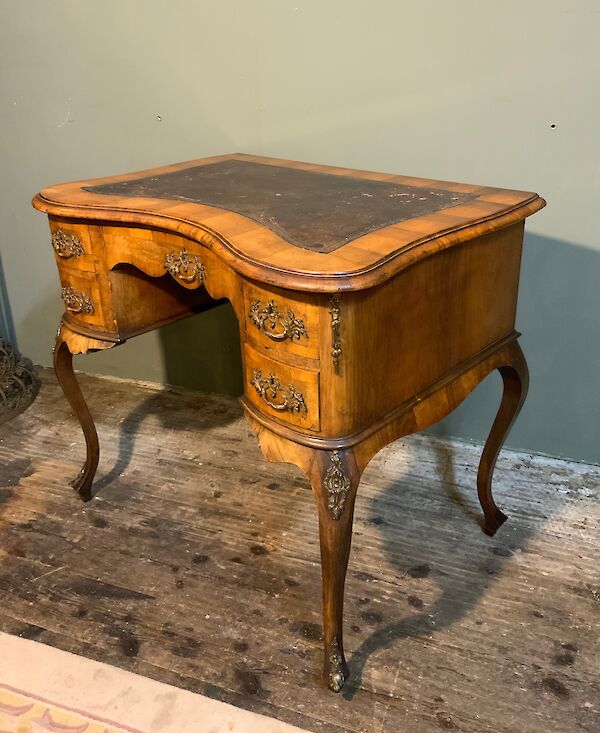
A French walnut writing table
£395.00
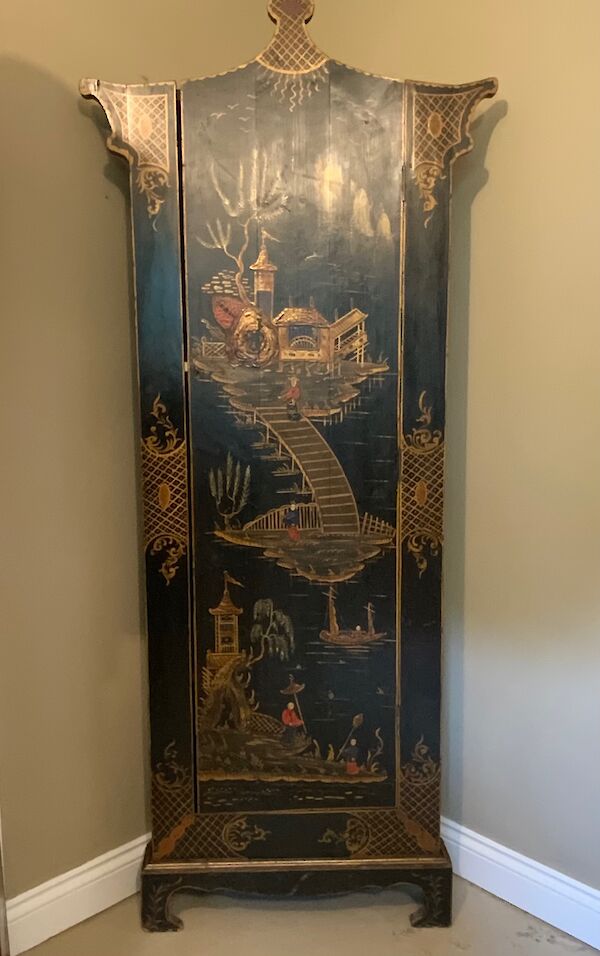
A chinoiserie decorated floor standing corner cabinet
£750.00

A fiddleback mahogany bureau
£2250.00
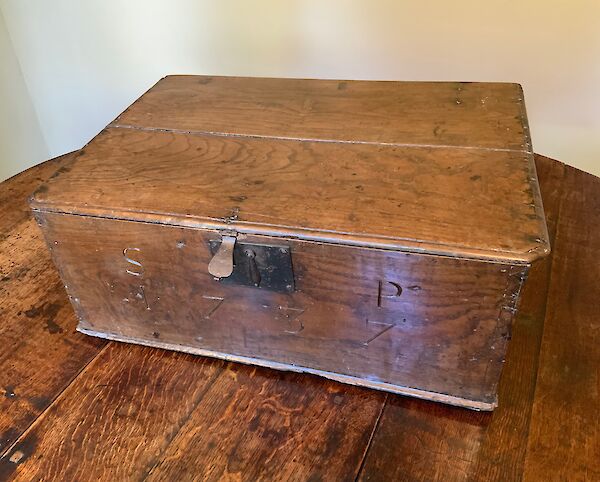
A large elm bible or deed box
£320.00
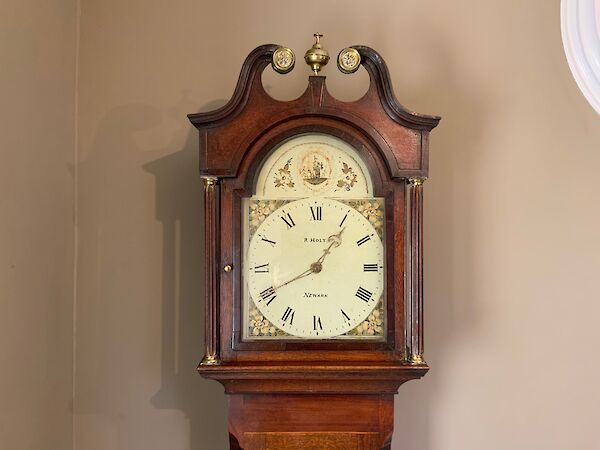
Oak longcase clock
£650.00
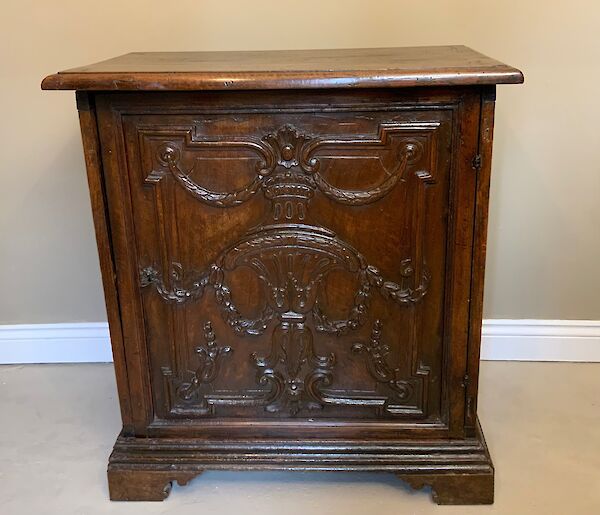
An Italian carved walnut cabinet
£1200.00
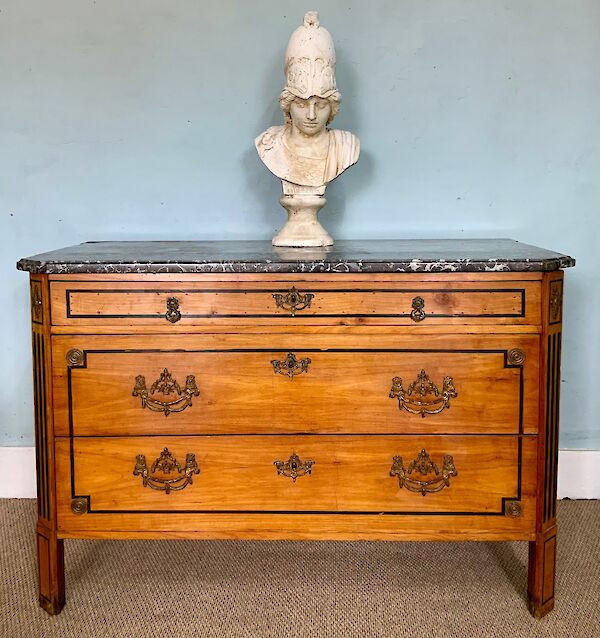
A continental commode
£1950.00
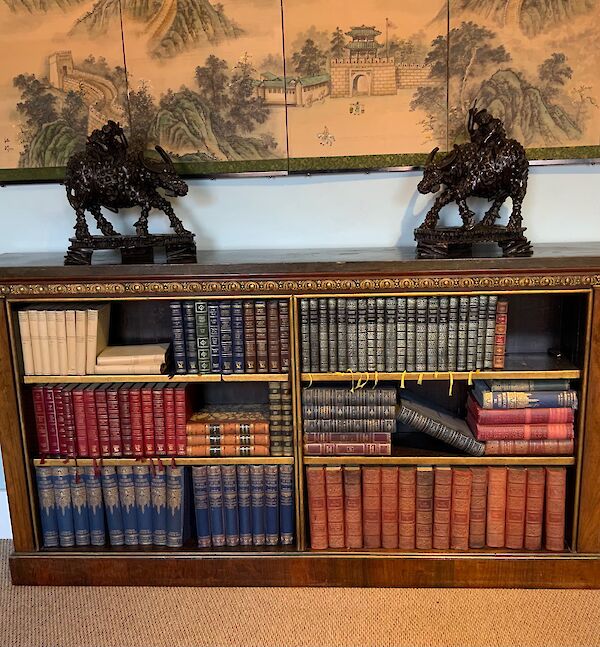
A regency rosewood open bookcase
£1000.00
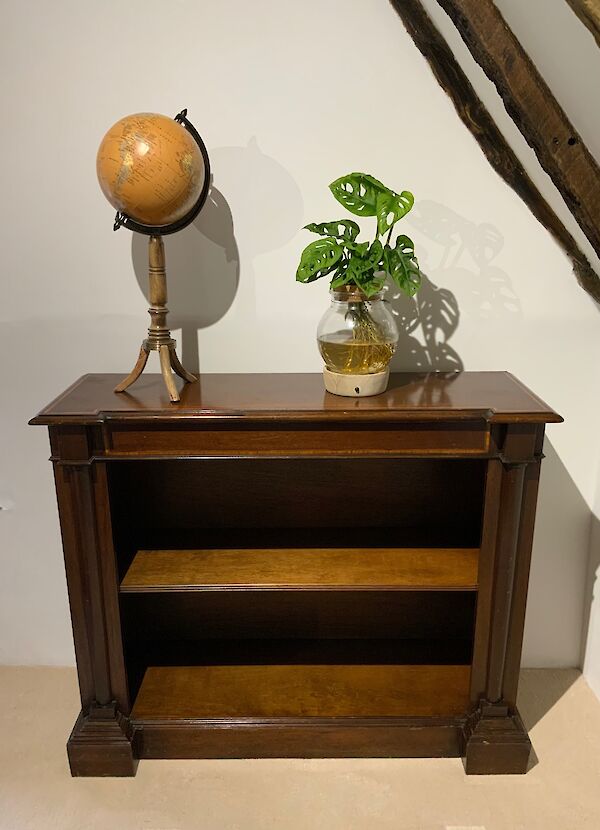
Mahogany open bookcase
£425.00

A mahogany canterbury
£525.00
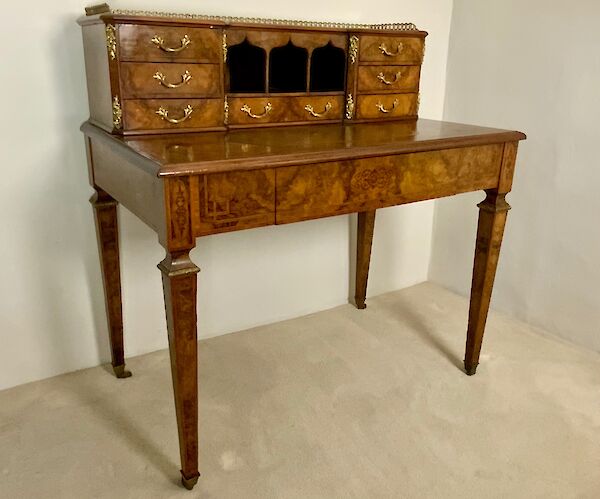
A burr walnut writing desk
£1200.00
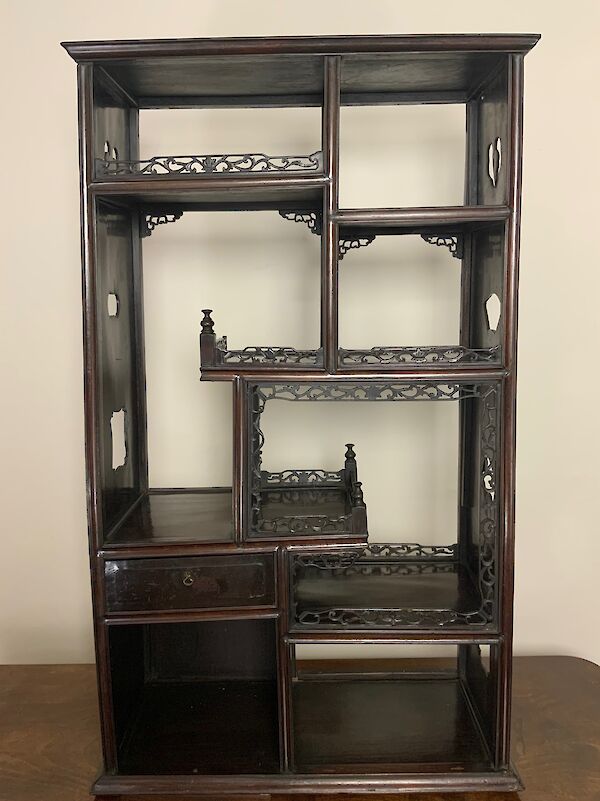
Chinese display shelves
£350.00
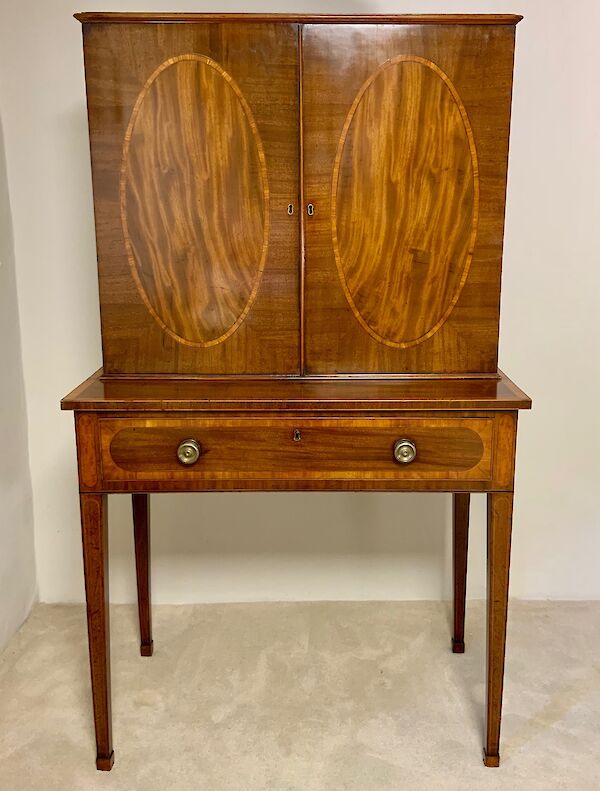
Georgian mahogany writing cabinet
£1850.00